How to Improve Fertility Naturally
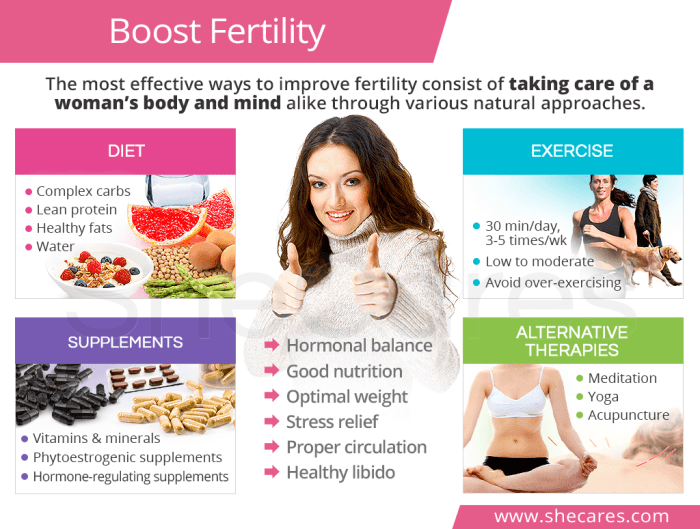
How to improve fertility is a question many couples face. This journey involves understanding the intricate interplay of lifestyle, reproductive health, and mental well-being. From optimizing diet and exercise to managing stress and seeking professional support, improving fertility requires a holistic approach. This guide explores key factors influencing fertility and provides practical strategies for enhancing your chances of conception.
We will delve into the impact of lifestyle choices, such as diet, exercise, and substance use, on reproductive health. We’ll also examine the role of reproductive health testing, fertility treatments, and stress management techniques in improving fertility outcomes. Finally, we’ll address the importance of mental health support and self-care in navigating this often challenging process.
Lifestyle Factors Affecting Fertility: How To Improve Fertility
Maintaining a healthy lifestyle is crucial for optimizing fertility in both men and women. Numerous factors beyond medical conditions can significantly impact the ability to conceive, highlighting the importance of proactive health choices. These lifestyle elements interact in complex ways, so addressing multiple areas simultaneously often yields the best results.
Diet’s Influence on Fertility
A balanced diet plays a pivotal role in reproductive health. Nutrient deficiencies or an excess of certain foods can negatively affect hormone production, ovulation, sperm quality, and overall reproductive function. The following table illustrates foods that support and hinder fertility:
| Fertility-Boosting Foods | Examples | Fertility-Hindering Foods | Examples |
|---|---|---|---|
| Foods rich in antioxidants | Berries, dark chocolate, leafy greens | Processed foods | Fast food, packaged snacks |
| Foods high in folate | Lentils, spinach, asparagus | Foods high in saturated and trans fats | Fried foods, processed meats |
| Foods rich in iron | Red meat (lean), beans, tofu | Excessive sugar and refined carbohydrates | Sugary drinks, white bread |
| Foods containing zinc | Oysters, pumpkin seeds, nuts | Alcohol | Beer, wine, spirits |
| Whole grains | Brown rice, quinoa, oats | Caffeine (in excess) | Coffee, tea, energy drinks |
Exercise and Fertility
Regular physical activity is generally beneficial for fertility, contributing to weight management and hormonal balance. However, excessive exercise can disrupt the hormonal system, leading to amenorrhea (absence of menstruation) and reduced fertility in women. For men, extreme endurance training can negatively impact sperm production. Moderate exercise, such as 30 minutes of moderate-intensity activity most days of the week, is generally recommended.
Harmful Substances and Reproductive Health
Smoking, alcohol consumption, and illicit drug use significantly impair reproductive health. Smoking damages DNA, reduces sperm count and motility in men, and increases the risk of ectopic pregnancy and miscarriage in women. Alcohol interferes with hormone production and can lead to ovulation disorders. Drug use can have a range of detrimental effects, depending on the substance.
- Smoking Cessation Resources: National Cancer Institute’s Smokefree.gov, American Lung Association’s Freedom From Smoking program.
- Alcohol Abuse Treatment: SAMHSA’s National Helpline, Alcoholics Anonymous.
- Substance Abuse Treatment: National Institute on Drug Abuse (NIDA), Substance Abuse and Mental Health Services Administration (SAMHSA).
Weight and Fertility
Maintaining a healthy weight is essential for optimal fertility. Obesity and underweight can both disrupt hormonal balance and reduce the chances of conception. A Body Mass Index (BMI) between 18.5 and 24.9 is generally considered healthy for conception. For example, a woman weighing 150 pounds and standing 5’4″ (64 inches) would have a BMI of approximately 23, falling within this healthy range.
Significant deviations from this range should be addressed through dietary changes and appropriate exercise.
Reproductive Health and Fertility Testing
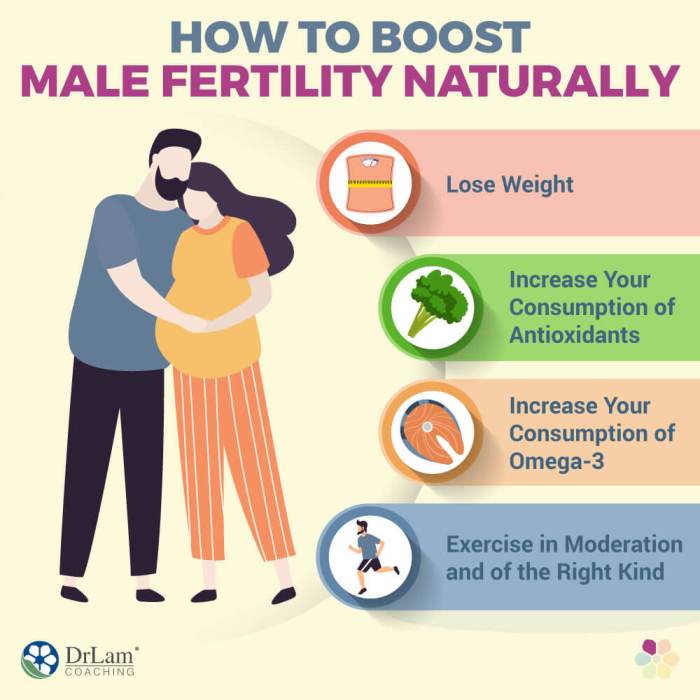
Understanding reproductive health is crucial for achieving pregnancy. A range of tests are available to assess both male and female fertility, helping identify potential issues and guide treatment options. These tests examine various aspects of reproductive function, from hormone levels to the health of reproductive organs.
Common Fertility Tests for Men and Women
Fertility testing involves a series of investigations to determine the cause of infertility. For women, these may include blood tests to assess hormone levels, ultrasound scans to visualize the reproductive organs, and tests to evaluate fallopian tube function. Men typically undergo semen analysis to evaluate sperm count, motility, and morphology. Further specialized tests may be employed depending on initial findings.
A typical fertility testing process might begin with a preliminary consultation, followed by initial blood tests and semen analysis (if applicable). Based on these results, further investigations such as hysterosalpingography (HSG), laparoscopy, or more specialized hormone testing might be recommended. The flowchart below illustrates a possible testing pathway. Note that the exact sequence may vary depending on individual circumstances and physician judgment.
Hormone Levels and Fertility
Hormone levels play a vital role in fertility. For women, key hormones include follicle-stimulating hormone (FSH), luteinizing hormone (LH), estradiol, and progesterone. Elevated FSH levels may indicate diminished ovarian reserve, while low progesterone may suggest a luteal phase defect. For men, testosterone levels are crucial for sperm production. Abnormal hormone levels can point to underlying endocrine disorders affecting fertility.
Interpretation of results requires careful consideration of the patient’s age, menstrual cycle phase (for women), and overall clinical picture. For example, a high FSH level in a woman approaching menopause is different from a high FSH level in a younger woman.
Fertility Treatments: IVF and IUI
In vitro fertilization (IVF) involves retrieving eggs from the ovaries, fertilizing them with sperm in a laboratory, and transferring the resulting embryos into the uterus. Intrauterine insemination (IUI) involves placing sperm directly into the uterus around the time of ovulation. IVF is generally used for more severe cases of infertility or when other treatments have failed, while IUI is a less invasive option often considered for milder cases.
IVF offers higher success rates but comes with higher costs and potential side effects such as ovarian hyperstimulation syndrome (OHSS). IUI has lower success rates but is less invasive and less expensive. The choice of treatment depends on the specific cause of infertility and the couple’s individual circumstances. Success rates vary significantly based on factors like age, cause of infertility, and the experience of the fertility clinic.
Causes of Infertility and Their Treatments
Infertility can stem from various factors affecting both men and women. Effective treatment requires accurate diagnosis and personalized approaches.
| Cause of Infertility | Treatment Options |
|---|---|
| Female: Ovulation disorders (e.g., PCOS) | Ovulation induction medications, lifestyle modifications (weight management), surgery (if necessary) |
| Female: Fallopian tube blockage | Surgery (e.g., laparoscopy), IVF |
| Female: Endometriosis | Medication, surgery, IVF |
| Female: Uterine fibroids | Medication, surgery, IVF |
| Male: Low sperm count/motility | Lifestyle changes, medication, assisted reproductive technologies (ART) like IUI or IVF |
| Male: Varicocele | Surgery, assisted reproductive technologies (ART) |
| Unexplained infertility | IUI, IVF, lifestyle modifications |
Stress and Anxiety Management Techniques for Enhanced Fertility
Chronic stress significantly impacts the body’s hormonal balance, potentially hindering fertility in both men and women. Understanding and implementing effective stress management techniques can be a crucial step in improving reproductive health and chances of conception. This section will explore practical strategies for stress reduction and their positive influence on fertility.
The Link Between Chronic Stress and Reduced Fertility
Chronic stress, characterized by prolonged exposure to stressors, disrupts the delicate hormonal equilibrium necessary for optimal reproductive function. Elevated levels of cortisol, the primary stress hormone, can interfere with the hypothalamic-pituitary-gonadal (HPG) axis, the system responsible for regulating reproductive hormones. This disruption can lead to irregular menstrual cycles in women, reduced sperm production and motility in men, and decreased chances of successful conception.
Studies have shown a correlation between high stress levels and decreased fertility rates, with some research indicating that women experiencing high levels of stress have a lower chance of pregnancy, even with assisted reproductive technologies. For instance, a study published in the journalHuman Reproduction* found a significant association between perceived stress and reduced pregnancy rates in women undergoing in vitro fertilization (IVF).
These findings highlight the importance of incorporating stress management into fertility enhancement strategies.
Relaxation Exercises and Mindfulness Practices for Fertility Improvement
Effective stress management involves a multifaceted approach. Relaxation exercises and mindfulness practices offer powerful tools for reducing stress and promoting overall well-being, thereby potentially improving fertility. These techniques help regulate the nervous system, reducing the production of stress hormones and promoting a state of calmness and balance.
- Deep Breathing Exercises: Practicing slow, deep breathing several times a day can significantly reduce stress and anxiety. Inhale deeply through your nose, hold for a few seconds, and exhale slowly through your mouth. Repeat this for 5-10 minutes.
- Progressive Muscle Relaxation: This technique involves systematically tensing and releasing different muscle groups in the body. Starting with the toes and working your way up to the head, tense each muscle group for a few seconds, then release, noticing the difference in sensation. This helps release physical tension associated with stress.
- Mindfulness Meditation: Mindfulness meditation involves focusing on the present moment without judgment. By paying attention to your breath, bodily sensations, or sounds, you can detach from anxious thoughts and worries. Even short, 5-10 minute sessions daily can have a significant impact.
- Guided Imagery: This technique involves creating vivid mental images of peaceful and relaxing scenes. Visualizing a tranquil beach, a lush forest, or any other calming environment can help reduce stress and promote relaxation.
Yoga and Meditation for Stress Reduction and Enhanced Fertility
Yoga and meditation offer a holistic approach to stress management, combining physical postures, breathing techniques, and mindfulness practices. Regular yoga practice can improve flexibility, strength, and balance, while also reducing stress hormones and promoting relaxation. Specific yoga poses, such as child’s pose (Balasana), supported reclined bound angle pose (Supta Baddha Konasana), and legs-up-the-wall pose (Viparita Karani), can be particularly beneficial for relieving stress and promoting reproductive health.
Mindfulness meditation, often incorporated into yoga practice, further enhances the stress-reducing benefits. Regular meditation can help regulate the nervous system, improve sleep quality, and reduce anxiety, all of which are crucial for optimal fertility.
A Weekly Schedule for Stress Reduction
Incorporating stress-reducing activities into a weekly schedule can significantly improve overall well-being and potentially enhance fertility. The following schedule is a suggestion, and activities can be adjusted based on individual preferences and needs.
| Day | Activity |
|---|---|
| Monday | 30 minutes of yoga (focus on restorative poses) |
| Tuesday | 15 minutes of deep breathing exercises |
| Wednesday | 20 minutes of mindfulness meditation |
| Thursday | Spend time in nature, go for a walk |
| Friday | Enjoy a relaxing bath with essential oils (lavender or chamomile) |
| Saturday | Spend time on a hobby you enjoy |
| Sunday | Practice progressive muscle relaxation |
Seeking Support for Mental Health Challenges
Infertility can be an incredibly emotionally taxing experience, often leading to feelings of stress, anxiety, and even depression. It’s crucial to understand that seeking support for these mental health challenges is not a sign of weakness, but rather a testament to your strength and commitment to your well-being. Openly acknowledging and addressing these feelings is a vital step in navigating the complexities of infertility and improving your overall health.The emotional toll of infertility can significantly impact your physical health and your ability to cope with the challenges of treatment.
Untreated mental health concerns can hinder fertility treatments and overall well-being. Therefore, accessing appropriate support is essential for both mental and potentially physical health.
Depression Support Groups and Online Communities
Many organizations offer support groups specifically designed for individuals struggling with infertility-related depression and anxiety. These groups provide a safe and supportive environment to share experiences, learn coping strategies, and connect with others who understand the unique challenges of infertility. Online communities also offer similar benefits, providing 24/7 access to support and information. Examples include Resolve: The National Infertility Association (resolve.org), which offers support groups and online resources, and similar organizations in other countries.
Contact information for these organizations can be found on their respective websites. Remember to research and choose a group or community that aligns with your needs and preferences.
Benefits of Therapy and Counseling
Therapy and counseling provide a structured and confidential space to process your emotions, develop coping mechanisms, and improve your overall mental well-being. Different therapeutic approaches, such as Cognitive Behavioral Therapy (CBT), can help identify and challenge negative thought patterns contributing to anxiety and depression. Other approaches, like mindfulness-based stress reduction (MBSR), can teach techniques for managing stress and improving emotional regulation.
Therapy can equip you with tools to navigate the emotional rollercoaster of infertility, fostering resilience and improving your ability to cope with setbacks. It also provides a supportive environment to process grief and loss, if applicable.
Warning Signs Requiring Professional Intervention, How to improve fertility
Recognizing when to seek professional help is crucial. Warning signs may include persistent feelings of sadness, hopelessness, or worthlessness; significant changes in appetite or sleep patterns; withdrawal from social activities; difficulty concentrating or making decisions; and thoughts of self-harm or suicide. If you experience any of these symptoms, please reach out to a mental health professional immediately. Don’t hesitate; your well-being is paramount.
Building Resilience and Coping Mechanisms
Developing resilience and effective coping mechanisms is vital for navigating the emotional challenges of infertility. This involves actively working towards a healthier mindset and developing strategies to manage stress and anxiety.
- Practice mindfulness and meditation techniques to reduce stress and improve self-awareness.
- Engage in regular physical activity, such as exercise or yoga, to release endorphins and boost mood.
- Prioritize healthy sleep habits to support physical and emotional well-being.
- Maintain a balanced diet and avoid excessive caffeine and alcohol consumption.
- Engage in activities that bring you joy and relaxation, such as hobbies, spending time in nature, or connecting with loved ones.
- Establish a strong support system of family, friends, or support groups.
- Set realistic expectations and avoid comparing your journey to others.
- Seek professional help when needed, recognizing that it’s a sign of strength, not weakness.
Ultimately, improving fertility is a personal journey requiring a multifaceted approach. By addressing lifestyle factors, understanding reproductive health, managing stress effectively, and seeking appropriate support, couples can significantly enhance their chances of achieving their family goals. Remember that patience, self-compassion, and professional guidance are invaluable assets throughout this process. While this guide provides comprehensive information, it is crucial to consult with healthcare professionals for personalized advice and treatment.
Query Resolution
What is the ideal age range for trying to conceive?
While individual circumstances vary, the most fertile years for women are generally between ages 20 and 30. After age 35, fertility begins to decline.
How long should a couple try to conceive before seeking medical help?
Generally, if a couple has been trying to conceive for 12 months without success (or 6 months if the woman is over 35), it’s recommended to seek medical evaluation.
Are there any over-the-counter supplements that can boost fertility?
Some supplements, like CoQ10 and Myo-inositol, have shown promise in some studies, but it’s crucial to consult a doctor before taking any supplements, as they can interact with medications or have side effects.
Can stress truly affect fertility?
Yes, chronic stress can disrupt hormonal balance and negatively impact both male and female fertility. Stress management techniques are vital for optimizing reproductive health.


