Diabetes Risk Factors A Comprehensive Overview
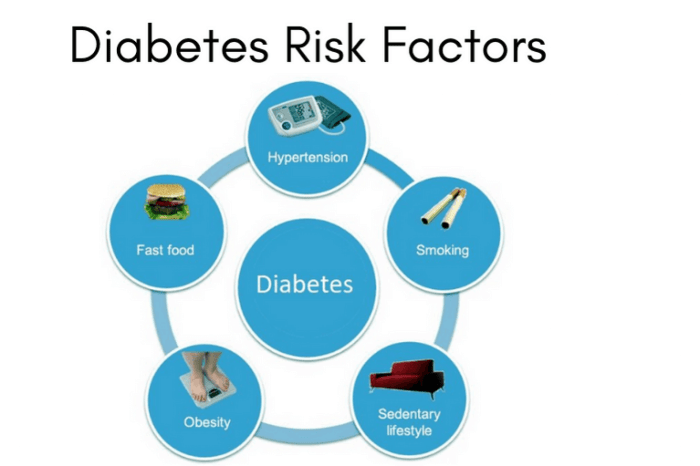
Diabetes risk factors encompass a wide range of lifestyle choices, genetic predispositions, and environmental influences. Understanding these factors is crucial for effective prevention and management of diabetes, a chronic metabolic disorder affecting millions globally. This exploration delves into the multifaceted nature of diabetes risk, examining both modifiable and non-modifiable contributors to this significant health concern. We will explore the complex interplay between genetics, lifestyle, and environmental factors, offering insights into how individuals can assess their personal risk and take proactive steps toward prevention and improved health outcomes.
From the impact of diet and physical activity to the role of genetics and underlying medical conditions, we will dissect the various elements that contribute to the development of diabetes. We’ll also examine the often-overlooked influence of stress, mental health, and sleep on overall health and diabetes risk, highlighting the importance of holistic well-being in disease prevention and management. The information provided aims to empower readers with knowledge to make informed choices about their health and seek appropriate medical guidance.
Lifestyle Factors Contributing to Diabetes Risk
Developing type 2 diabetes is often linked to a combination of lifestyle choices and genetic predisposition. While some individuals may be genetically more susceptible, lifestyle modifications can significantly impact the risk, offering opportunities for prevention and management. Understanding the relationship between diet, physical activity, and weight is crucial in mitigating this risk.
Diet and Diabetes Risk
Dietary choices play a significant role in blood sugar regulation and overall diabetes risk. Consuming foods that cause rapid spikes in blood glucose levels can overwork the pancreas, leading to insulin resistance and ultimately, type 2 diabetes. Conversely, a balanced diet rich in fiber and low in processed sugars can help maintain stable blood sugar levels and reduce diabetes risk.
| High-Glycemic Foods | Low-Glycemic Foods | High-Glycemic Foods | Low-Glycemic Foods |
|---|---|---|---|
| White bread | Whole-wheat bread | Potatoes (white) | Sweet potatoes |
| Sugary drinks | Water, unsweetened tea | White rice | Brown rice |
| Processed cereals | Oatmeal | Candy | Fruits (berries, apples) |
| Pastries | Legumes (beans, lentils) | Corn syrup | Whole grains (quinoa, barley) |
Physical Inactivity and Insulin Resistance
Lack of physical activity contributes significantly to insulin resistance, a key factor in the development of type 2 diabetes. When we are inactive, our bodies become less sensitive to insulin, the hormone that helps glucose enter cells for energy. This leads to higher blood glucose levels. Regular physical activity improves insulin sensitivity, helping glucose enter cells more effectively and lowering blood sugar levels.Incorporating more physical activity into daily routines can be achieved through various strategies.
This includes taking the stairs instead of the elevator, walking or cycling instead of driving short distances, and engaging in at least 150 minutes of moderate-intensity aerobic activity per week, such as brisk walking, swimming, or cycling. Strength training exercises are also beneficial for overall health and metabolic function.
Obesity and Type 2 Diabetes
Obesity, particularly abdominal or visceral obesity, is strongly associated with type 2 diabetes. Visceral fat, the fat stored around internal organs, is metabolically active and releases substances that interfere with insulin function, leading to insulin resistance. Reducing overall body fat, especially visceral fat, is crucial in preventing or managing type 2 diabetes.A healthy weight management plan involves a combination of dietary changes and regular physical activity.
A balanced diet, rich in fruits, vegetables, whole grains, and lean protein, combined with regular exercise, is key. Gradual weight loss, rather than rapid weight loss, is generally recommended for long-term success and to minimize health risks. This could involve making small, sustainable changes to one’s diet and exercise routine, like reducing portion sizes, incorporating more fruits and vegetables, and gradually increasing physical activity levels.
Genetic Predisposition and Family History
Diabetes, both type 1 and type 2, has a significant hereditary component. While lifestyle choices play a crucial role, a person’s genetic makeup can substantially increase or decrease their susceptibility to developing the disease. Understanding this genetic influence is vital for both preventative measures and personalized treatment strategies.Genetic factors influence diabetes development through a complex interplay of multiple genes, each contributing a small effect, rather than a single “diabetes gene.” These genes affect various aspects of glucose metabolism, insulin production, and immune function, ultimately impacting an individual’s risk.
This means that inheriting a predisposition doesn’t guarantee developing diabetes, but it does significantly alter the probability.
Genes Associated with Type 1 and Type 2 Diabetes
The genetic landscape of type 1 and type 2 diabetes differs considerably. Type 1 diabetes is an autoimmune disease, where the body’s immune system attacks insulin-producing cells in the pancreas. Type 2 diabetes, on the other hand, is characterized by insulin resistance and impaired insulin secretion. This difference is reflected in the genes associated with each type.Type 1 diabetes is strongly linked to genes within the human leukocyte antigen (HLA) complex on chromosome 6.
Specific HLA alleles, such as HLA-DR3 and HLA-DR4, are associated with a significantly increased risk. Other genes, though contributing less prominently, also play a role in the development of type 1 diabetes, affecting immune regulation and pancreatic beta-cell function.Type 2 diabetes has a more polygenic inheritance pattern, meaning multiple genes contribute to the risk. Several genes have been identified that influence insulin resistance, beta-cell function, and glucose metabolism.
Examples include genes involved in the insulin signaling pathway (like INSIG2), genes affecting pancreatic beta-cell development (like TCF7L2), and genes related to fat metabolism (like PPARG).
Comparison of Genetic Risk Factors for Type 1 and Type 2 Diabetes
| Characteristic | Type 1 Diabetes | Type 2 Diabetes |
|---|---|---|
| Inheritance Pattern | Multifactorial, but with strong HLA association | Polygenic, with numerous genes contributing smaller effects |
| Key Genes | HLA genes (HLA-DR3, HLA-DR4), other immune-related genes | TCF7L2, PPARG, INSIG2, and many others |
| Mechanism | Autoimmune destruction of pancreatic beta-cells | Insulin resistance and impaired insulin secretion |
| Onset | Typically childhood or adolescence | Usually adulthood, but increasingly seen in younger populations |
Illustrative Flowchart of Genetic Influence on Diabetes Development
The following describes a flowchart illustrating how genetic factors influence diabetes development. Imagine a flowchart with a central box labeled “Individual’s Genetic Makeup.” Branching from this are several boxes representing different genetic factors (e.g., HLA genes, genes influencing insulin sensitivity, genes affecting beta-cell function). Each of these boxes has arrows pointing to a box labeled “Diabetes Risk.” The strength of the arrow corresponds to the strength of the genetic influence.
Another branch from “Individual’s Genetic Makeup” leads to a box representing “Environmental Factors” (diet, exercise, etc.), which also points to “Diabetes Risk.” Finally, “Diabetes Risk” leads to a final box, “Diabetes Development” or “No Diabetes Development,” depending on the cumulative effect of genetic and environmental factors. The flowchart visually demonstrates the interaction between genetics and environment in determining diabetes risk.
A person with a strong genetic predisposition might still avoid diabetes with a healthy lifestyle, while someone with a weaker predisposition could develop diabetes with an unhealthy lifestyle.
Age and Ethnicity: Diabetes Risk Factors
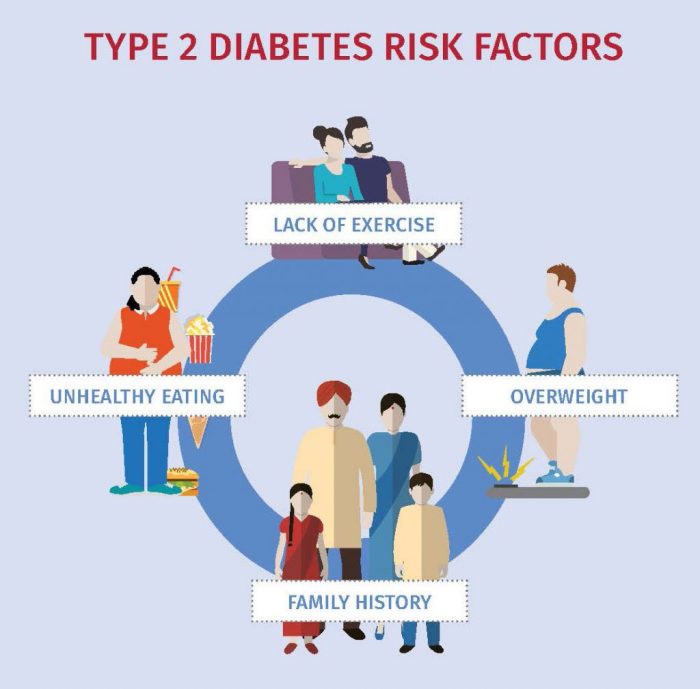
The risk of developing type 2 diabetes significantly increases with age and varies considerably across different ethnic groups. Understanding these factors is crucial for effective prevention and management strategies. This section will explore the interplay of age, ethnicity, and the physiological mechanisms contributing to differing diabetes risks.
Age plays a prominent role in the development of type 2 diabetes. As we age, our bodies undergo various physiological changes that can increase insulin resistance and impair glucose metabolism. These changes include a decline in beta-cell function (the cells in the pancreas that produce insulin), reduced insulin sensitivity in muscle and fat tissues, and an increase in visceral fat (fat stored around the organs).
Age-Related Increase in Type 2 Diabetes Risk, Diabetes risk factors
The prevalence of type 2 diabetes rises steadily with age. While it can occur at any age, the risk dramatically increases after the age of 45. This is largely attributed to the age-related decline in insulin sensitivity and beta-cell function mentioned above. For example, studies consistently show a significantly higher percentage of individuals diagnosed with type 2 diabetes in the 65+ age group compared to younger populations.
This increase isn’t simply due to longer exposure to risk factors; the physiological changes associated with aging actively contribute to the development of the disease.
Ethnicity and Diabetes Prevalence
Ethnicity is another significant factor influencing diabetes risk. Certain ethnic groups exhibit a disproportionately higher prevalence of type 2 diabetes compared to others. This disparity is complex and stems from a combination of genetic predisposition, lifestyle factors, and socioeconomic influences.
- Indigenous populations: Many Indigenous communities worldwide experience significantly higher rates of type 2 diabetes, often linked to historical trauma, limited access to healthcare and healthy food options, and rapid lifestyle transitions.
- African Americans: African Americans have a higher prevalence of type 2 diabetes compared to non-Hispanic whites. This is partly attributed to genetic factors, but also to higher rates of obesity and other risk factors within this population.
- Hispanic/Latino Americans: Similar to African Americans, Hispanic/Latino Americans also experience a higher prevalence of type 2 diabetes, often linked to a combination of genetic susceptibility, dietary habits, and socioeconomic disparities.
- Asian Americans: While the overall prevalence might appear lower compared to some other groups, specific subgroups within Asian American communities show elevated risks, highlighting the importance of considering ethnic diversity within this broad category.
- South Asians: Individuals of South Asian descent are at increased risk of developing type 2 diabetes, even at lower BMIs compared to other populations. This suggests that factors beyond body weight contribute significantly to their higher risk.
Physiological Mechanisms Underlying Ethnic Variations in Diabetes Risk
The increased risk of type 2 diabetes in certain ethnic groups isn’t solely explained by lifestyle factors. Genetic variations influence insulin sensitivity, beta-cell function, and the body’s response to glucose. These genetic variations can differ significantly across ethnic populations. For instance, specific gene variants associated with increased insulin resistance are more prevalent in some ethnic groups than others.
Furthermore, variations in body composition, such as a higher proportion of visceral fat, also play a role and can be influenced by both genetics and environment.
Medical Conditions and Medications
Certain medical conditions and medications can significantly increase the risk of developing type 2 diabetes. Understanding these factors is crucial for preventative measures and effective management of blood sugar levels. This section will explore the interplay between specific health conditions, prescribed drugs, and their impact on diabetes risk.
Several medical conditions are strongly associated with an elevated risk of developing diabetes. These conditions often share underlying physiological mechanisms that contribute to insulin resistance or impaired glucose tolerance.
Medical Conditions Increasing Diabetes Risk
Polycystic ovary syndrome (PCOS), for example, is a hormonal disorder affecting women of reproductive age. Characterized by irregular periods, ovarian cysts, and high levels of androgens, PCOS frequently leads to insulin resistance, making individuals more susceptible to type 2 diabetes. Similarly, hypertension (high blood pressure) is often linked to insulin resistance and metabolic syndrome, a cluster of conditions that increase the risk of heart disease, stroke, and diabetes.
Chronic conditions like obesity, particularly abdominal obesity, further exacerbate insulin resistance and elevate diabetes risk. Other conditions such as pancreatitis and Cushing’s syndrome also significantly increase the likelihood of developing diabetes.
Medications That Increase Diabetes Risk
Several medications, while beneficial for treating other health issues, can have the unintended consequence of increasing the risk of developing diabetes. These medications often affect insulin secretion, insulin sensitivity, or glucose metabolism. The following table summarizes some of these medications and their mechanisms.
| Medication Class | Example Medications | Mechanism of Increased Diabetes Risk | Additional Notes |
|---|---|---|---|
| Atypical Antipsychotics | Olanzapine, Clozapine, Risperidone | Weight gain and insulin resistance | Close monitoring of blood glucose is recommended for patients taking these medications. |
| Corticosteroids | Prednisone, Dexamethasone | Increased glucose production by the liver and reduced insulin sensitivity | Short-term use is generally safe, but long-term use significantly increases diabetes risk. |
| Thiazide Diuretics | Hydrochlorothiazide, Chlorthalidone | Impaired glucose tolerance and increased insulin resistance | Often used to treat hypertension; careful monitoring is necessary. |
| Protease Inhibitors | Ritonavir, Indinavir (used in HIV treatment) | Insulin resistance and impaired glucose metabolism | Patients should be monitored for glucose intolerance during treatment. |
Impact of Pre-existing Conditions and Medications on Blood Sugar Control
Pre-existing conditions and certain medications can significantly impact the body’s ability to regulate blood sugar levels. For instance, individuals with PCOS often require more intensive management of their blood sugar due to existing insulin resistance. Similarly, those taking medications like corticosteroids may experience elevated blood glucose levels, necessitating adjustments in their diabetes treatment plan if they already have diabetes, or increased vigilance for the development of diabetes if they do not.
Effective blood sugar control often requires a personalized approach that considers both pre-existing conditions and the potential impact of any medications being taken. Regular monitoring of blood glucose levels and close collaboration with healthcare professionals are essential for managing blood sugar effectively in these circumstances.
In conclusion, understanding diabetes risk factors is paramount for both preventative measures and effective management of the disease. While some risk factors, such as genetics and age, are beyond our control, many others, including diet, exercise, and stress management, are modifiable. By adopting a proactive approach to lifestyle choices and seeking appropriate medical attention, individuals can significantly reduce their risk of developing diabetes and improve their overall health and well-being.
Remember, knowledge is power, and taking control of your health journey is a crucial step towards a healthier future.
FAQ Guide
What are the early warning signs of type 2 diabetes?
Early warning signs can include increased thirst and urination, unexplained weight loss, increased hunger, blurred vision, slow-healing sores, and frequent infections.
Can type 1 diabetes be prevented?
Currently, type 1 diabetes cannot be prevented, as it’s an autoimmune disease. However, early detection and management can help mitigate complications.
How often should I get screened for diabetes?
Screening recommendations vary based on risk factors. Consult your doctor to determine the appropriate frequency for your individual circumstances.
Is gestational diabetes a serious condition?
Gestational diabetes can lead to complications during pregnancy and increase the risk of type 2 diabetes later in life. Careful management is essential.


